
Automatic Rescue Device in Elevators: Why It Matters in UAE
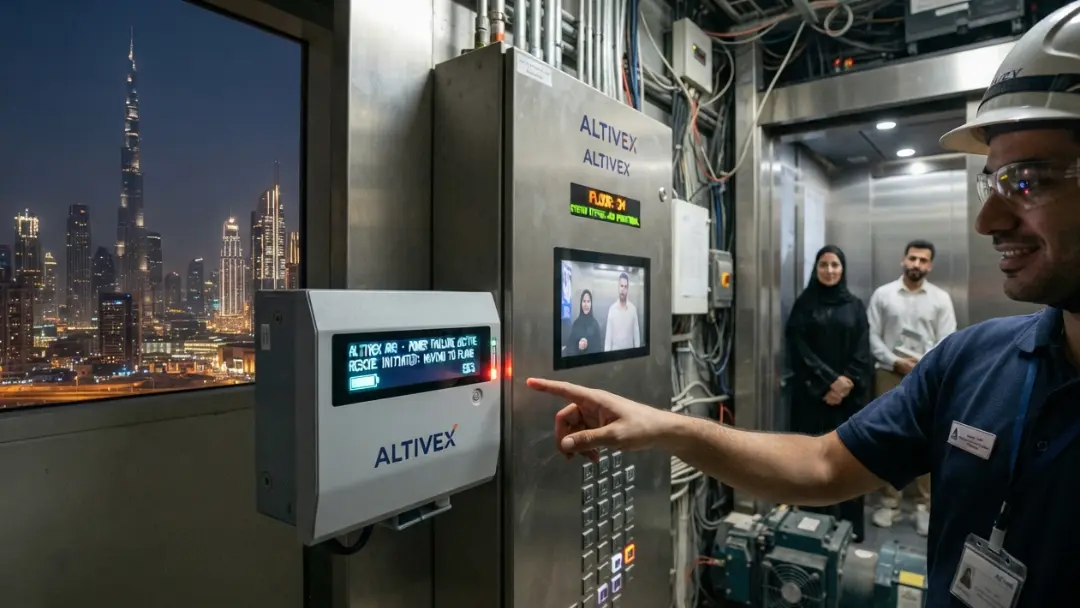
A sudden power failure can leave an elevator stopped between floors, creating discomfort, panic, and unnecessary safety risks for passengers. An automatic rescue device in elevators solves this problem by using backup battery power to move the lift to a safe landing, open the doors, and help passengers exit without waiting for manual rescue. For UAE buildings, where high-rise properties, commercial towers, villas, hospitals, hotels, and residential communities depend heavily on elevators, ARD is an important part of modern commercial and residential lift safety.
Altivex integrates reliable rescue technology into elevator systems to support safer operation during unexpected power interruptions. The right ARD specification can also help developers, consultants, and facility managers meet applicable safety standards in UAE while reducing the risk of passenger entrapment.
What Is an Automatic Rescue Device in Elevators?
An automatic rescue device in elevators is a dedicated backup power and control system designed to operate the elevator during a mains power failure. Instead of leaving the car stranded between floors, the system detects the outage and automatically initiates a controlled rescue sequence.
A typical ARD performs these functions:
- Power failure detection – Detects interruption of the main electrical supply.
- Battery activation – Automatically switches to stored backup energy.
- Controlled movement – Moves the elevator toward a suitable landing at a safe speed.
- Automatic door opening – Opens the doors after reaching the landing.
- Passenger communication – Depending on system configuration, voice prompts or indicators can guide passengers during the rescue sequence.
- System reset – Returns the elevator to normal operation after mains power is restored.
This helps in “no-man-trap” situations, where passengers remain inside an elevator because of a power interruption. In occupied UAE buildings, particularly during hot weather, reducing the time passengers spend inside a stalled cabin is an important safety consideration.
How Does an Auto Rescue Device for Lift Work During a Power Failure?
An auto rescue device for lift applications follows a programmed sequence designed to bring passengers to the nearest practical landing without requiring manual intervention.
- Main power fails: The ARD immediately detects the loss of electrical supply.
- Backup power activates: The battery system supplies the required power to the elevator control and drive system.
- Lift movement begins: Depending on the elevator configuration and load balance, the system determines the appropriate travel direction.
- Safe landing is reached: The car travels to the nearest suitable floor under controlled conditions.
- Doors open: Passengers can leave the cabin without waiting for external rescue.
- Guidance may activate: Configured voice prompts or indicators can provide simple instructions to passengers.
- Normal operation resumes: Once utility power returns, the elevator transitions back to normal operation according to its control system.
Some ARD configurations can support around 2–3 rescue operations per hour, depending on battery capacity, motor rating, elevator configuration, and system design. The actual rescue capacity should therefore be confirmed from the manufacturer’s technical specification rather than assumed from a generic ARD rating.
ARD Device in Lifts vs UPS: What Is the Difference?
An ARD device in lifts is not simply a conventional UPS connected to an elevator. Although both provide backup power, their functions are different.
|
ARD |
Standard UPS |
|
Designed specifically for elevators |
Designed for general electrical equipment |
|
Controls emergency elevator movement |
Primarily maintains electrical power |
|
Supports controlled landing during power failure |
Does not normally control elevator travel |
|
Works with elevator control and safety systems |
Used for computers, electronics and other loads |
|
Designed around lift motor and control requirements |
Sized according to connected electrical equipment |
For this reason, specifying an elevator with an appropriate ARD is different from simply adding a general-purpose backup power supply.
What Technical Specifications Should You Check Before Buying ARD?
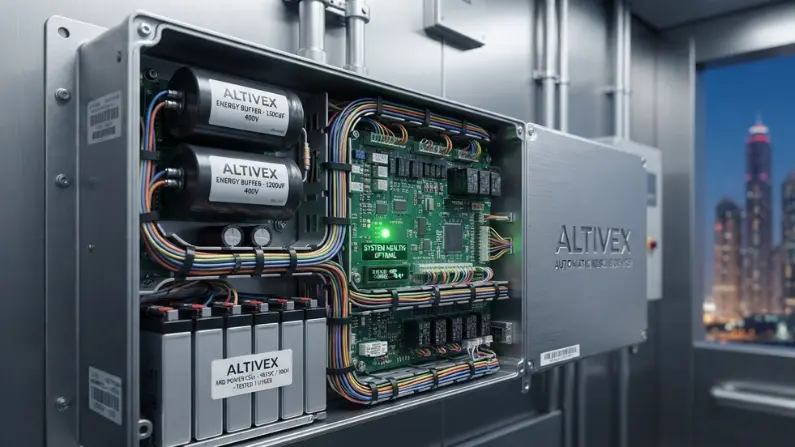
Choosing an ARD should involve more than comparing prices. Consultants, MEP contractors, developers, and building owners should verify the electrical and operational configuration before approving a system. Common configuration options may include:
- 220V single-phase
- 380V two-phase
- 220V three-phase
- 380V three-phase
The correct specification depends on the elevator’s electrical architecture and should be confirmed by the manufacturer or technical team. Other important factors include:
- Elevator motor power and rated load
- Voltage and phase requirements
- Battery capacity
- Rescue cycles supported
- Compatibility with the elevator controller
- Charging and battery-management technology
- Emergency communication features
- Installation environment
- Applicable safety and conformity requirements
Modern systems can also incorporate intelligent battery management, controlling charging and protecting the battery against conditions such as overcharging, excessive discharge, overvoltage, or undervoltage. This can help maintain battery performance and extend its useful service life.
Lift Automatic Rescue Device Price: What Determines the Cost?
The lift automatic rescue device price depends on the elevator’s technical requirements rather than one fixed market rate. A buyer should evaluate the complete specification before comparing quotations.
Key cost factors include:
- Power rating: Higher motor loads generally require a more capable ARD.
- Voltage and phase: Electrical configuration affects system selection and integration.
- Battery capacity: Higher capacity can support greater rescue requirements.
- Battery management: Advanced monitoring and charging protection can affect the system specification.
- Controller compatibility: The ARD must integrate correctly with the elevator control system.
- New installation or retrofit: Integrating ARD during elevator manufacturing can be simpler than adapting it to an existing installation.
- Installation and testing: The final project cost may include technical installation, commissioning, and testing.
For a reliable comparison, request an itemized quotation covering the ARD unit, battery specification, compatibility, installation, testing, and warranty rather than comparing the equipment price alone.
Is ARD Mandatory for Elevators in the UAE?

ARD requirements can depend on the elevator type, building, project authority, applicable regulations, and installation circumstances. Therefore, developers should not treat one generic statement as applicable to every elevator project across all seven emirates.
From a technical compliance perspective, IS/EN 81 requirements are important when assessing elevator safety, while local authority requirements may apply separately to the project. The relevant Civil Defence or regulatory authority should be consulted for the specific installation.
For new projects and modernization work, specifying ARD early can help avoid compatibility problems later and provide a clearer safety and compliance pathway.
How ARD Improves Passenger Safety During Power Cuts
The value of ARD is not limited to moving an elevator to the nearest floor. It helps address several passenger-safety concerns associated with unexpected power loss.
Reduces passenger entrapment
Passengers can exit once the lift reaches a safe landing.
Prevents man-trap situations
Automated rescue reduces dependence on immediate manual intervention.
Provides controlled movement
The elevator follows a programmed rescue sequence rather than uncontrolled movement.
Supports passenger communication
Voice prompts or indicators can reassure and guide occupants where equipped.
Improves emergency readiness
Backup functionality provides an additional layer of protection against unexpected outages.
Supports building continuity
Faster passenger release can reduce disruption in residential, commercial, hospitality, and institutional buildings.
Can ARD Be Retrofitted Into an Existing Elevator?
An automatic rescue device in elevators can be considered for suitable existing systems, but retrofit compatibility must be assessed before installation. The elevator controller, motor, electrical configuration, available space, battery requirements, and existing safety systems all influence whether a retrofit is practical. A professional assessment should verify:
- Existing elevator controller compatibility
- Motor rating and electrical supply
- Available machine-room or control-panel space
- Battery and charging requirements
- Door and safety-system integration
- Applicable regulatory requirements
- Testing and commissioning requirements
For older elevators, ARD installation can also form part of a broader modernization programme where control, safety, or electrical components need upgrading.
ARD Maintenance and Testing: What Building Owners Should Know
An ARD should not be treated as a fit-and-forget component. Its battery and control functions need periodic checks to ensure the system will operate when an actual power failure occurs. Recommended checks include:
- Simulated power-failure testing
- Battery condition and charging checks
- Rescue-cycle verification
- Electrical connection inspection
- Emergency communication checks
- Door-opening and landing verification
- Documentation of test and maintenance results
Regular testing is particularly important because battery performance can decline over time even when the elevator appears to operate normally.
Conclusion
Choosing the right automatic rescue device in elevators can make a significant difference to passenger safety during unexpected power failures. By providing controlled emergency movement, automatic door opening, battery backup, and optional passenger guidance, ARD helps reduce entrapment risks and supports safer elevator operation. For UAE projects, selecting an ARD based on the lift’s electrical configuration, battery capacity, rescue-cycle requirements, compatibility, and applicable safety standards ensures a more reliable solution.
FAQ
Does every elevator need ARD?
Requirements vary by project and authority, but ARD is widely used as an important safety feature in modern elevator installations.
How many rescue cycles can an ARD provide?
Some systems can support approximately 2–3 rescue operations per hour, but actual performance depends on battery capacity, motor load, and elevator configuration.
Can ARD be installed in an old elevator?
Yes, where the existing controller, motor, electrical system, and safety components are compatible. A technical assessment is required before retrofit.
Is ARD the same as fire evacuation operation?
No. ARD responds to power failure, while fire-service and evacuation modes are separate safety functions governed by their applicable requirements.
How can I check my elevator's ARD specification?
Ask the elevator manufacturer or service provider for the ARD model, voltage, phase, battery capacity, rescue-cycle specification, and applicable compliance documentation.
Our Services
Elevator Manufacturing | Elevator Supply | Elevator Installation
Ready to Install Our Elevators?
Book a free consultation with Altivex today!
Our Specialities!
Trusted world wide| Free Installation | EU Standards | 5-Year Warranty | Fast 14-Day Delivery — Suitable for Residential, Commercial & Industrial Applications