
Difference Between Elevator and Escalator in UAE Buildings
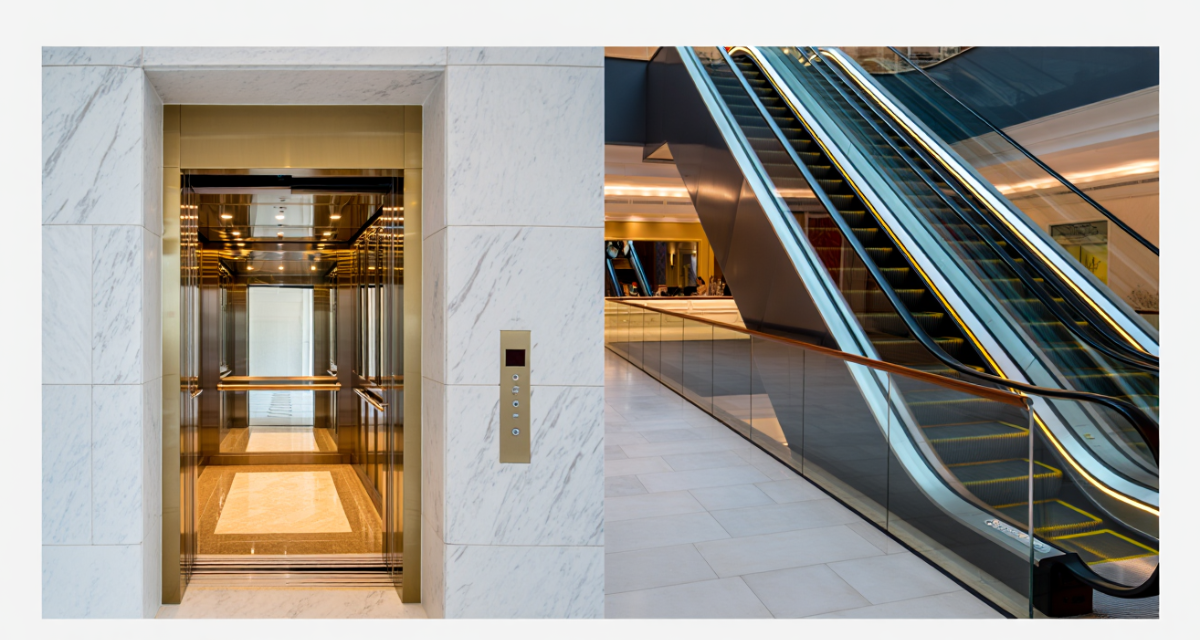
In the UAE, modern construction requires an advanced vertical transportation system to enable greater accessibility, convenience and movement of passengers within buildings. Developers, property owners and businesses need to understand the differences between elevators (or lifts) and escalators when selecting an appropriate mobility solution for their respective buildings.
Although both types of vertical transportation are designed to move users from floor to floor within buildings, they operate using different methods and fulfil different purposes. Elevators provide fully enclosed vertical transportation to carry passengers and cargo, while escalators provide continuous movement of large volumes of people within busy public places. When developing either commercial or residential developments within the UAE, it is important to comprehend the different functions of both lift elevators and escalators. At Altivex Elevators, we create functional and contemporary vertical transportation systems that adapt to the changing needs of existing and future builds throughout the UAE.
Difference Between Elevator and Escalator in UAE for Modern Buildings
In an elevator vs escalator comparison, there are different factors to consider, including the type of building, types of users, the volume of people using the building, along with their accessibility needs, and how much area is available in the building to install either system. Both elevators and escalators are both used in today’s modern buildings in the UAE; however, their uses are completely different.
For residential buildings:
Elevators are perfect for villas, duplexes and high-rise residential towers
Elevators provide users with an individual and private experience when travelling between floors
Elevators are perfect for people over 65 years old and those with young families
Conveniently used to transport groceries, bags and prams
Escalators are rarely used in residential properties
Commercial Buildings
Shopping malls and airports commonly use both systems
Escalators manage continuous pedestrian traffic efficiently
Elevators improve accessibility for disabled individuals
Suitable for transporting goods, luggage, and equipment
Improve traffic flow in large commercial spaces
Widely used in Dubai and Abu Dhabi commercial developments
Understanding the Difference Between Lift Elevator and Escalator in UAE
|
Feature |
Elevator |
Escalator |
|
Movement Type |
Vertical enclosed movement |
Continuous inclined movement |
|
Passenger Capacity |
Limited per trip |
Continuous large crowd movement |
|
Accessibility |
Suitable for all users, including wheelchair users |
Limited accessibility for some users |
|
Space Requirement |
Requires a shaft and a cabin |
Requires a wider open floor area |
|
Speed |
Controlled floor-to-floor travel |
Continuous passenger flow |
|
Common Locations |
Villas, offices, hospitals, residential towers |
Shopping malls, airports, and metro stations |
|
Privacy |
Offers enclosed private travel |
Open public transportation |
|
Energy Usage |
Operates only when called |
Runs continuously during operation |
Key Functional Differences Between Elevators and Escalators
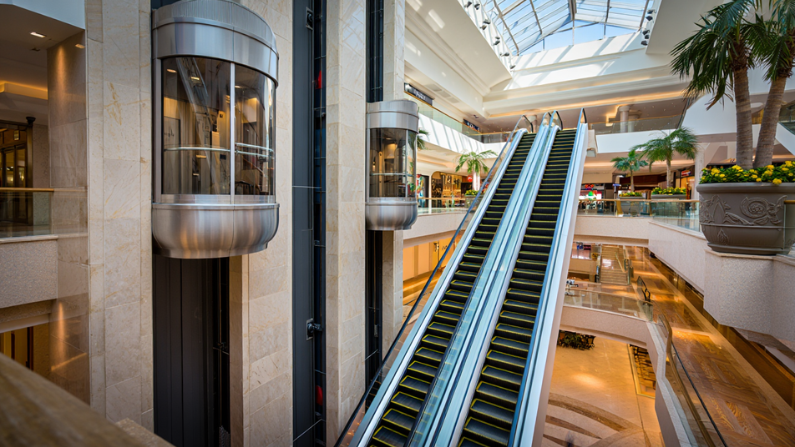
The differences between escalators and elevators can highlight how customers will use these systems based on the following:
1. Move Style – Elevators function vertically by providing enclosed cabins for users to travel up/down within. An escalator provides users with an inclined stair-type means of travel by continuously moving on and off the escalator.
2. Passenger Capacity – An elevator has a limited capacity for carrying passengers per trip; however, an escalator allows for numerous passengers to travel continuously through its endless movement.
3. Accessibility – Elevators accommodate individuals who are physically handicapped (i.e., wheelchair bound), as well as the elderly, and luggage transport.
4. Footprint / Space – Elevators occupy space beneath the building to house the hydraulic or mechanical equipment, while an escalator requires greater amounts of open floor space.
5. Traffic Control – Escalators are the preferred choice when installed in a busy, public location with a high volume of pedestrian foot traffic.
6. Privacy & Comfort – Elevators provide passengers with enclosed (and less public) transportation from one level to another.
7. Energy Use – Elevators operate as called for, while escalators are operated non-stop during operation.
Benefits of Escalators for High-Traffic Areas
The benefits associated with using escalators in large, public places where constant movement occurs are numerous and extensive.
Continuous Passenger Movement
Escalators operate continuously, eliminating waiting times typically found with elevator usage, thereby reducing congestion during peak use periods.
Improved Traffic Control
Escalators facilitate the movement of large groups of individuals between levels within shopping malls, subways, or airports that can see thousands of people each day moving through their facilities.
Enhanced Customer Experience
Modern-day escalators provide a smooth means of travelling vertically within commercial establishments and provide a much better overall experience to the visiting public.
Efficient Use of Space in Public Areas
Escalators require a larger floor opening than would normally be associated with an elevator. Still, they provide an efficient means of connecting levels that are relatively close together, while providing for uninterrupted vertical travel for passengers.
Safety Features in Modern Elevators and Escalators
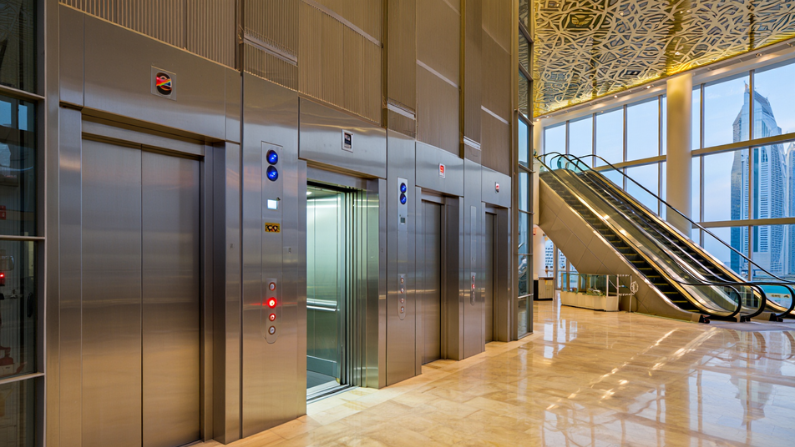
Safety remains one of the most important factors in vertical transportation systems. Modern elevators and escalators are equipped with advanced technologies to ensure passenger protection.
| Elevator Safety Features | Purpose |
| Emergency Braking Systems | Stops the elevator safely during emergencies |
| Automatic Rescue Devices | Moves passengers safely during power failure |
| Overload Protection | Prevents operation beyond the weight capacity |
| Backup Power Systems | Maintains operation during an electricity interruption |
| Door Safety Sensors | Prevents doors from closing on passengers |
| Emergency Alarm Buttons | Allows passengers to request assistance |
| Escalator Safety Features | Purpose |
| Emergency Stop Buttons | Stops escalator movement instantly during emergencies |
| Step Monitoring Systems | Detects irregular step movement for safety |
| Handrail Safety Sensors | Ensures smooth and synchronised handrail operation |
| Skirt Protection Systems | Prevents objects from getting trapped near steps |
| Anti-Slip Step Surfaces | Reduces the risk of slipping accidents |
| Speed Monitoring Technology | Maintains safe operating speed |
Factors to Consider Before Choosing Elevators or Escalators
Choosing between elevators and escalators depends on several important factors.
Types of Structures
Common residential structures typically require elevators, while common malls and transit centres tend to require escalators.
Passenger Flow
High-volume public facilities get more use from escalators, while controlled flow environments rely more heavily on elevators.
Enabling Accessibility
Elevators are generally mandated within all public-use buildings intended to provide access to people with disabilities.
Space Required
Both elevators and escalators require some dedicated space, but elevators tend to necessitate vertical space for the configuration of an elevator shaft, while escalators generally need more expansive horizontal floor layouts.
Repair and Maintenance
Although both elevators and escalators require routine maintenance, the associated costs with each can fluctuate based on actual application.
Cost and Budget Factors
Factors including installation difficulty, customisation of elevators or escalators to meet specifications and building size and shape all lead to a particular project’s total expenditures.
Why Choose Altivex Elevators?
Altivex Elevators provides complete vertical transportation solutions across the UAE for residential, commercial, and industrial buildings.
Our services include:
- Residential elevator installation
- Commercial elevator systems
- Escalator installation and maintenance
- MRL elevator solutions
- Elevator modernization
- Safety inspections and servicing
- Customized lift solutions
Our team focuses on elevator safety standards in UAE, energy efficiency, modern technology, and long-term performance to deliver reliable transportation systems for the UAE’s modern infrastructure.
Conclusion
Owners of residential and commercial properties located in UAE need to understand how an elevator system differs from an escalator system when selecting a transportation option. An elevator will provide a privately controlled, accessible method of moving vertically in a building, whereas an escalator is intended to allow for continuous movement of large crowds in busy public areas.
The distinctions between an elevator and an escalator become increasingly apparent when considering different characteristics such as available passenger capacity, accessibility, different types of buildings and various operational requirements. By properly comparing elevators versus escalators, property owners can make informed decisions on which systems will provide convenience, efficiency and ultimately, safety within their buildings.
FAQ
1. Which is more suitable for high-rise buildings in the UAE?
Elevators are more suitable for high-rise buildings due to efficient vertical transportation.
2. Do escalators consume more electricity than elevators?
Yes, escalators usually consume more electricity because they run continuously.
3. Can elevators and escalators be installed together in one building?
Yes, many commercial buildings use both systems for better accessibility and traffic flow.
4. Which system requires more installation space?
Escalators generally require more open floor space than elevators.
Our Services
Elevator Manufacturing | Elevator Supply | Elevator Installation
Ready to Install Our Elevators?
Book a free consultation with Altivex today!
Our Specialities!
Trusted world wide| Free Installation | EU Standards | 5-Year Warranty | Fast 14-Day Delivery — Suitable for Residential, Commercial & Industrial Applications