
How Do Elevator Control Panels Work? A Buyer’s Guide | Altivex Elevators
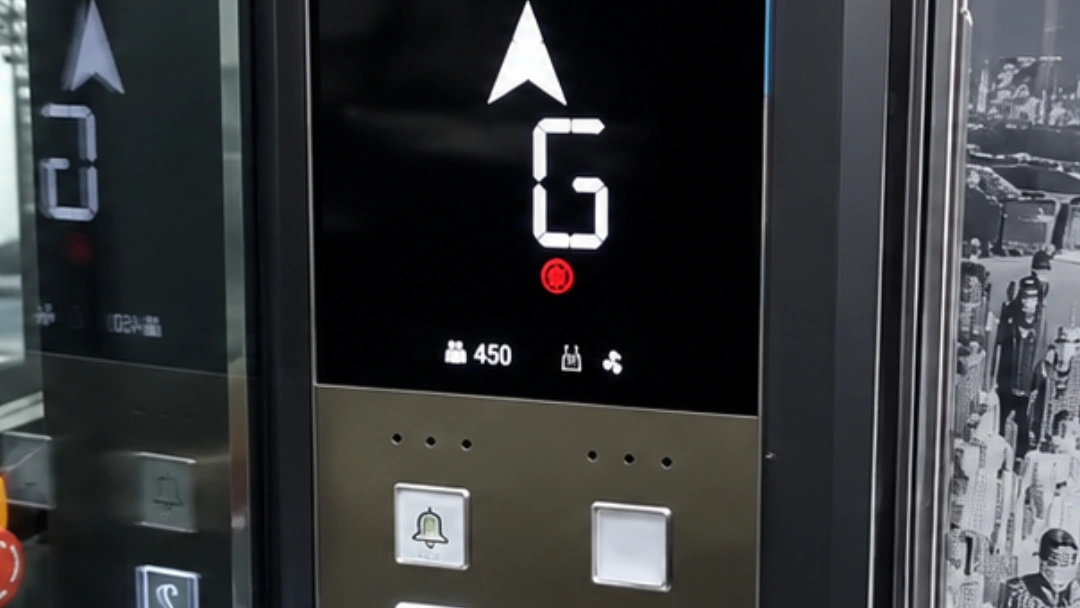
An elevator control panel is the central system that manages how an elevator operates. It controls the cabin’s movement, speed, stopping and door functions. It receives signals from buttons, sensors and safety devices throughout the elevator. The controller processes these signals and sends commands to the motor, drive and door operator. Understanding the control panel helps buyers evaluate elevator performance, safety and reliability. This guide explains the key components and how they work together in an elevator system.
What Is an Elevator Control Panel and How Does It Work?
An elevator control panel system receives signals from passengers and sensors, processes them through the controller, and coordinates the elevator motor and other components.
- Receives Commands – Floor buttons and other control devices send passenger requests to the elevator controller.
- Processes Signals – The controller determines where the cabin needs to go and manages the required movement sequence.
- Controls Movement – It communicates with the drive and motor to start, stop, accelerate and decelerate the elevator smoothly.
- Manages Doors & Safety – The panel coordinates door opening and closing while monitoring safety devices and preventing movement when unsafe conditions are detected.
What Are the Key Components of Elevator Control Panels?
An elevator control panel contains several electrical and electronic components that work together to control the lift’s movement, doors and safety functions.
- Main Controller (PLC/Microprocessor) – The central unit that processes signals and controls elevator operation.
- Variable Frequency Drive (VFD) – Controls the motor’s speed, acceleration and deceleration for smooth movement.
- Contactors & Relays – Switch and control power to the motor, brake, door operator and other electrical circuits.
- Power Supply Unit – Converts and distributes electrical power to the control system and connected components.
- Safety Relay/Circuit – Monitors safety devices and prevents elevator operation when an unsafe condition is detected.
- Door Control Module – Controls door opening, closing and related door safety signals.
- Terminal Blocks – Provide organized connection points for wiring between the control panel and elevator components.
- Circuit Breakers & Fuses – Protect electrical circuits against overloads and short circuits.
- Encoder/Positioning Interface – Receives position and speed information to help the controller accurately stop the cabin at each floor.
- Emergency/Rescue Interface – Connects systems such as ARD or emergency power equipment to support passenger rescue during power failure.
How Elevator Control Panel Wiring Ties Together the Lift System?
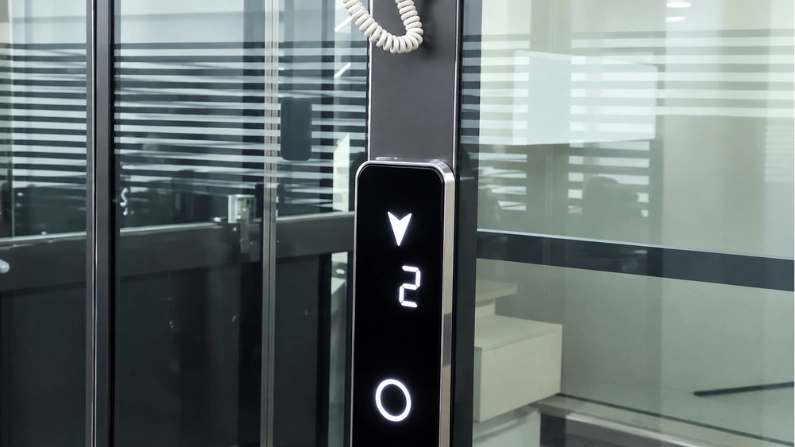
The elevator control panel acts as the central connection point between the controller and the elevator’s motor, doors, sensors, buttons and safety devices. Wiring carries both power and control signals between these components.
- Power Connections – Incoming electrical power is distributed through breakers, contactors and other protection devices to the controller, drive, motor and auxiliary circuits.
- Controller to Drive – The main controller sends movement commands to the VFD or drive, which controls the motor’s speed, direction, acceleration and stopping.
- Floor & Cabin Signals – Wires connect landing buttons, cabin buttons, floor sensors and position feedback devices to the controller so it knows where the elevator is and where it needs to go.
- Door Connections – The control panel connects to the door operator, door sensors and door-lock circuits to coordinate opening and closing and prevent movement when the doors aren’t safely secured.
- Safety Circuit – Emergency stops, door locks, overspeed protection and other safety devices are connected through dedicated safety circuits. If a safety condition is interrupted, the controller prevents or stops elevator operation.
- Communication & Feedback – Encoders and other feedback devices send information about motor speed and cabin position back to the controller, allowing accurate floor stopping and smooth operation.
Selecting the right lift control panel?
To select the right control panel, analyse:
Type of lift
Passenger, goods, hydraulic, traction or others applications.
Motor and drive compatibility
The panel should be compatible with the motor and drive specifications.
Number of floors and stops
The control system should meet the needs of the building.
Traffic requirements
Consider the expected movement of passengers or goods.
Safety requirements
Consider the expected movement of passengers or goods.
Future serviceability
Select a system that offers ready availability of replacement parts and technical support.
Building requirements
Existing lifts may need a different approach to panels than new installations.
What Determines the Lift Control Panel Price
- Lift Type & Application
- Number of stops and floors
- Cylinder capacity
- Drive and controller specification
- Number and type of safety inputs.
- Control requirements for doors
- features for communication and monitoring
- Customisation
- New Installation vs. Replacement
- Testing, Programming, Commissioning
- Installation and Customer Assistance
Buyer tip: Instead of just selecting a panel on the lowest price, compare the full specs and services included.
What Buyers Should Look for Before Ordering Elevator Control Panel?
Buyer’s checklist:
- Check the lift type and application.
- Give motor and drive details.
- Kindly confirm the number of floors and stops.
- Check the panel size and installation needs.
- Ask for the control panel spec sheet.
- Verify compatibility with safety system.
- Check wiring diagrams & documentation.
- Ask about the testing that is included.
- Check warranty and technical support.
- Define responsibilities for installation, programming and start-up.
- Question on spare parts and future maintenance.
Conclusion
Choosing the right elevator control panel system is essential for ensuring safe, smooth, and reliable elevator operation. Buyers should consider factors such as elevator type, control technology, safety features, energy efficiency, compatibility, and ease of maintenance before making a decision. A well-designed control panel not only manages the elevator’s movement but also helps improve performance, reduce downtime, and extend system life. By understanding how the control panel works and evaluating the right specifications, building owners and project managers can choose a system that meets their operational and safety requirements.
FAQ
1. What is a elevator control panel?
A lift control panel is the central control system that receives signals from buttons, sensors and safety devices and coordinates functions such as elevator movement, stopping, door operation and safety monitoring.
2. What are the main parts of a lift control panel?
Typical components are the controller, drive, relays, contactors, protection devices, input/output modules, safety circuits and diagnostic interfaces.
3. What is lift control panel wiring?
The wiring is correct so that the controller can communicate with the lift’s motor, doors, sensors, buttons and safety systems.
4. Do hospital or healthcare buildings need larger elevator shafts?
Yes. Healthcare facilities typically require larger service and goods lift shafts, often starting around 1,600 mm by 2,200 mm, to accommodate stretchers, medical equipment, and wider accessibility requirements.
5.What is the difference between lift control panel and lift control panel?
In most contexts these terms refer to the same kind of control equipment. Terminology can differ by region, manufacturer or lift application.
Our Services
Elevator Manufacturing | Elevator Supply | Elevator Installation
Ready to Install Our Elevators?
Book a free consultation with Altivex today!
Our Specialities!
Trusted world wide| Free Installation | EU Standards | 5-Year Warranty | Fast 14-Day Delivery — Suitable for Residential, Commercial & Industrial Applications