Industrial Freight Elevator vs Cargo Elevator in UAE: Which Is Right for Your Warehouse?
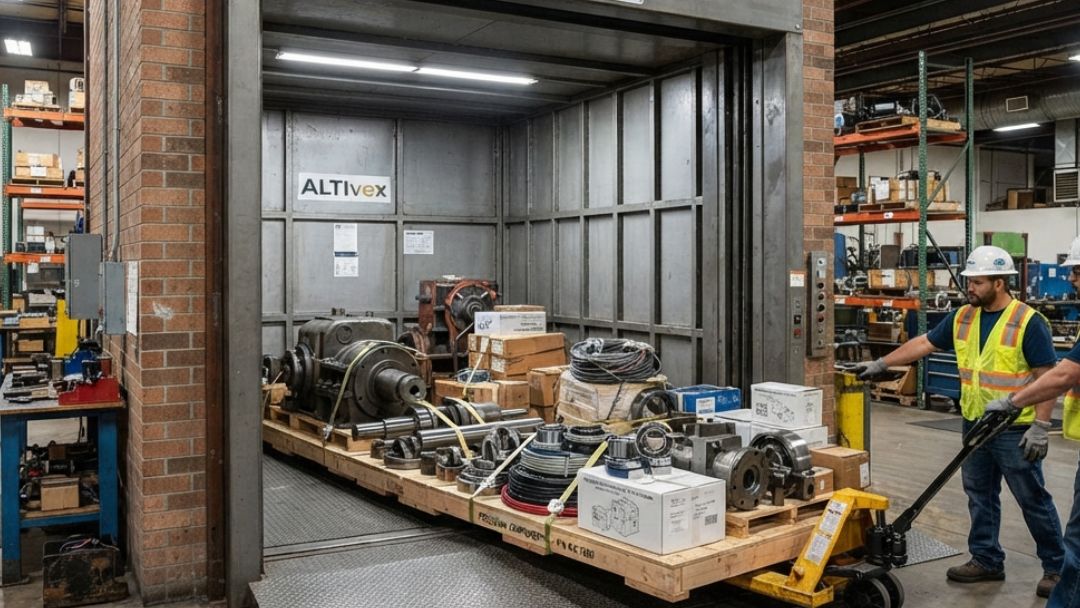
Choosing between an industrial freight elevator vs cargo elevator in UAE depends on your warehouse’s load capacity, usage frequency, available space and material-handling requirements. In general, an industrial freight elevator is better suited to heavy, frequent and demanding operations, while a cargo elevator may be ideal for moving goods, stock and pallets between levels. The right solution can improve vertical material movement, reduce manual handling and prevent operational delays.
Industrial Freight Elevator vs Cargo Elevator: What Is an Industrial Freight Elevator?
An industrial freight elevator is a robust hoisting mechanism created to meet the toughest requirements in material handling. It is employed for the transportation of heavy packages, pallets, machines, raw materials and products.
These hoists are widely used in;
- Manufacturing plants
- Distribution centres
- Large warehouses
- Logistics facilities
- Industrial buildings
- Automotive facilities
- Construction-related operations
An industrial freight elevator is generally designed for durability and repeated operation.
What Is a Cargo Elevator in UAE?
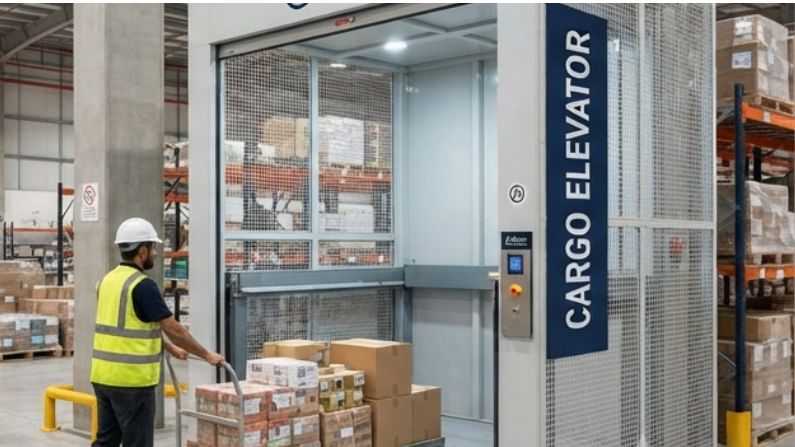
A cargo elevator in UAE is used to move goods, stock and materials vertically within commercial and industrial facilities. Depending on its design, capacity and application, it can be used in warehouses, retail storage areas, factories and service zones.
A cargo elevator can be suitable for:
- Moving goods between multiple floors
- Transporting boxes and stock
- Moving pallets and trolleys
- Connecting different warehouse levels
- Supporting regular loading cycles
- Optimising limited floor space
Cargo lifting systems can have different configurations depending on the application. Some may use platform-based or guided lifting designs, while others may include safety gates or mesh enclosures for specific material-handling requirements.
Industrial Freight Elevator vs Cargo Elevator: Key Differences
When comparing an industrial freight elevator vs cargo elevator, the main differences relate to their intended use, construction, capacity and operating requirements.
|
Feature |
Industrial Freight Elevator |
Cargo Elevator |
|
Primary use |
Heavy industrial material movement |
General goods and material transportation |
|
Load requirement |
Designed for heavy to very heavy loads |
Suitable for light to moderate loads, with customised options available |
|
Usage |
Frequent and intensive industrial operation |
Regular or moderate material-handling operation |
|
Typical applications |
Factories, logistics hubs, manufacturing facilities and heavy warehouses |
Warehouses, storage areas, commercial facilities and service zones |
|
Construction |
Robust, enclosed system with reinforced cabin construction and heavy-duty components |
Flexible platform or guided lifting configuration, depending on the application |
|
Doors and enclosure |
May include heavy-duty doors and reinforced cabin systems |
May include safety gates, mesh enclosures or other suitable configurations |
|
Drive technology |
May use hydraulic or traction technology, depending on the project |
Configuration and lifting technology vary according to the system design |
|
Installation requirements |
May require specific shaft, pit and overhead provisions |
Some configurations may offer more flexible installation options |
|
Customisation |
Highly customisable for demanding industrial requirements |
Can be customised according to load, space and workflow requirements |
|
Best for |
Pallets, machinery, heavy cargo and intensive warehouse operations |
Stock, goods, trolleys, pallets and general material movement |
Which Elevator Is Better for Heavy Warehouse Loads?
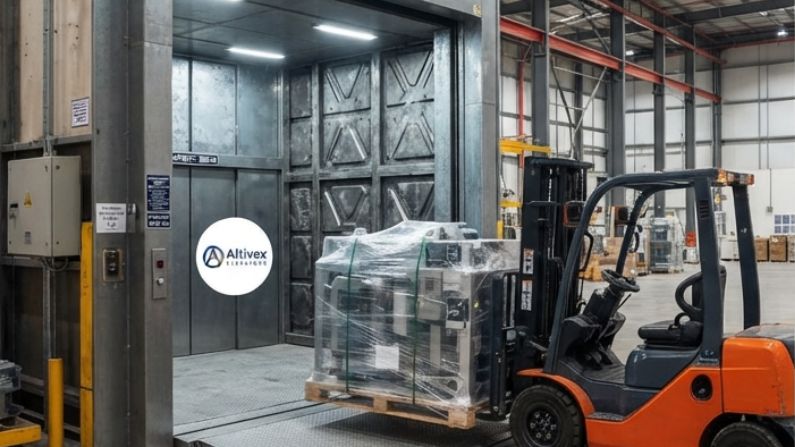
If your warehouse regularly handles heavy pallets, industrial equipment or bulky materials, an industrial freight elevator is generally the stronger option.
A properly designed industrial elevator lift can support:
- High load capacities
- Repeated daily operation
- Large pallet movement
- Heavy industrial equipment
- Bulky or irregular loads
- Intensive warehouse workflows
The elevator should be selected according to the heaviest load that will be transported, not simply the average load. A warehouse that usually moves 1,000 kg but occasionally handles 3,000 kg equipment should consider its maximum operational requirement when choosing a system.
When Is a Cargo Elevator the Better Choice?
A cargo elevator may be the better option when a warehouse handles moderate loads and does not require a system designed for continuous heavy-duty industrial operation.
It may be suitable for:
- Retail stockrooms
- Multi-level storage facilities
- Small distribution warehouses
- Commercial back-of-house areas
- Light manufacturing facilities
- Warehouses moving packaged goods
If goods are relatively uniform in size and weight, and the elevator is not subjected to continuous heavy-duty cycles, a cargo solution can provide an efficient way to improve vertical transportation.
How Warehouse Layout Influences Your Elevator Choice
The physical layout of your warehouse can significantly affect the type of elevator you can install.
Available Shaft Dimensions
The elevator must fit the available shaft or installation area while providing sufficient internal space for the intended cargo.
Floor-to-Floor Height
The distance between levels affects travel requirements, system design and installation planning.
Loading and Unloading Space
The elevator should provide convenient access for forklifts, pallet trucks and other material-handling equipment.
Existing Building Structure
Existing warehouses may have structural limitations that affect installation. A customised design may be required to work around current building conditions.
Installation Requirements
Installation requirements can vary significantly between elevator types. Some freight elevator systems may require a dedicated enclosed shaft, pit and overhead space, while certain cargo lift configurations may offer more flexible installation options depending on their design.
Future Expansion
If your warehouse is expected to grow, choosing a scalable vertical lift warehouse solution can help support future operational needs and avoid expensive modifications later.
What Should You Consider Before Choosing an Industrial Elevator Lift?
Before choosing an industrial elevator lift, consider:
Maximum Load Capacity: Identify the heaviest item, pallet or equipment the elevator must carry.
Platform Size: The system should accommodate the actual dimensions of pallets, cages, trolleys and machinery.
Usage Frequency: A system operating dozens or hundreds of cycles daily requires a different design from one used occasionally.
Travel Distance: The number of floors and total travel height can influence the elevator configuration.
Loading Method: Consider whether goods will be loaded manually or using pallet trucks, forklifts and other equipment.
Operating Environment: Dust, heat, humidity and industrial conditions may affect the materials and components selected.
Maintenance Access: Easy access to key components can simplify servicing and help reduce downtime.
Why Safety Matters in Warehouse Elevator Selection
Safety should be a primary consideration when choosing between an industrial freight elevator and a cargo elevator. Important safety features may include:
- Door interlocking systems
- Overload protection
- Emergency stop controls
- Safety braking systems
- Emergency alarms
- Stable guide systems
- Landing protection
- Clearly displayed load ratings
Whether people can travel with goods depends on the elevator’s design and applicable safety requirements, so businesses should confirm permitted use, loading limits and compliance requirements with a qualified elevator provider.
Why Choose Altivex Elevators for Your Warehouse?
At Altivex Elevators, warehouse lifting solutions can be planned around specific operational needs, including:
- Required load capacity
- Platform and cabin dimensions
- Shaft and pit conditions
- Floor-to-floor travel height
- Forklift and pallet truck access
- Operating frequency
- Available installation space
- Safety and maintenance requirements
- Future warehouse expansion
Whether you require a heavy-duty industrial goods elevator, a customised cargo elevator in UAE or an industrial elevator lift for regular material movement, the right system should be designed around your actual workflow.
Conclusion
An industrial freight elevator or a cargo elevator can be chosen based on specific warehouse requirements. Considerations include the weight load, frequency of use, building structure, and material handling. Proper designs, along with professional assistance from companies like Altivex Elevators, can help ensure that vertical shipment of goods is efficient, while minimizing manual handling.
FAQ
Can a cargo elevator be customised for different warehouse needs?
Yes, cargo elevators can be customised based on load capacity, platform size, travel height and available installation space.
How often should a warehouse elevator be maintained?
Maintenance frequency depends on the elevator type, usage intensity, operating environment and manufacturer recommendations.
Can an industrial freight elevator be installed in an existing warehouse?
Yes, subject to the building’s structure, available space, shaft requirements and other technical considerations.
Our Services
Elevator Manufacturing | Elevator Supply | Elevator Installation
Ready to Install Our Elevators?
Book a free consultation with Altivex today!
Our Specialities!
Trusted world wide| Free Installation | EU Standards | 5-Year Warranty | Fast 14-Day Delivery — Suitable for Residential, Commercial & Industrial Applications